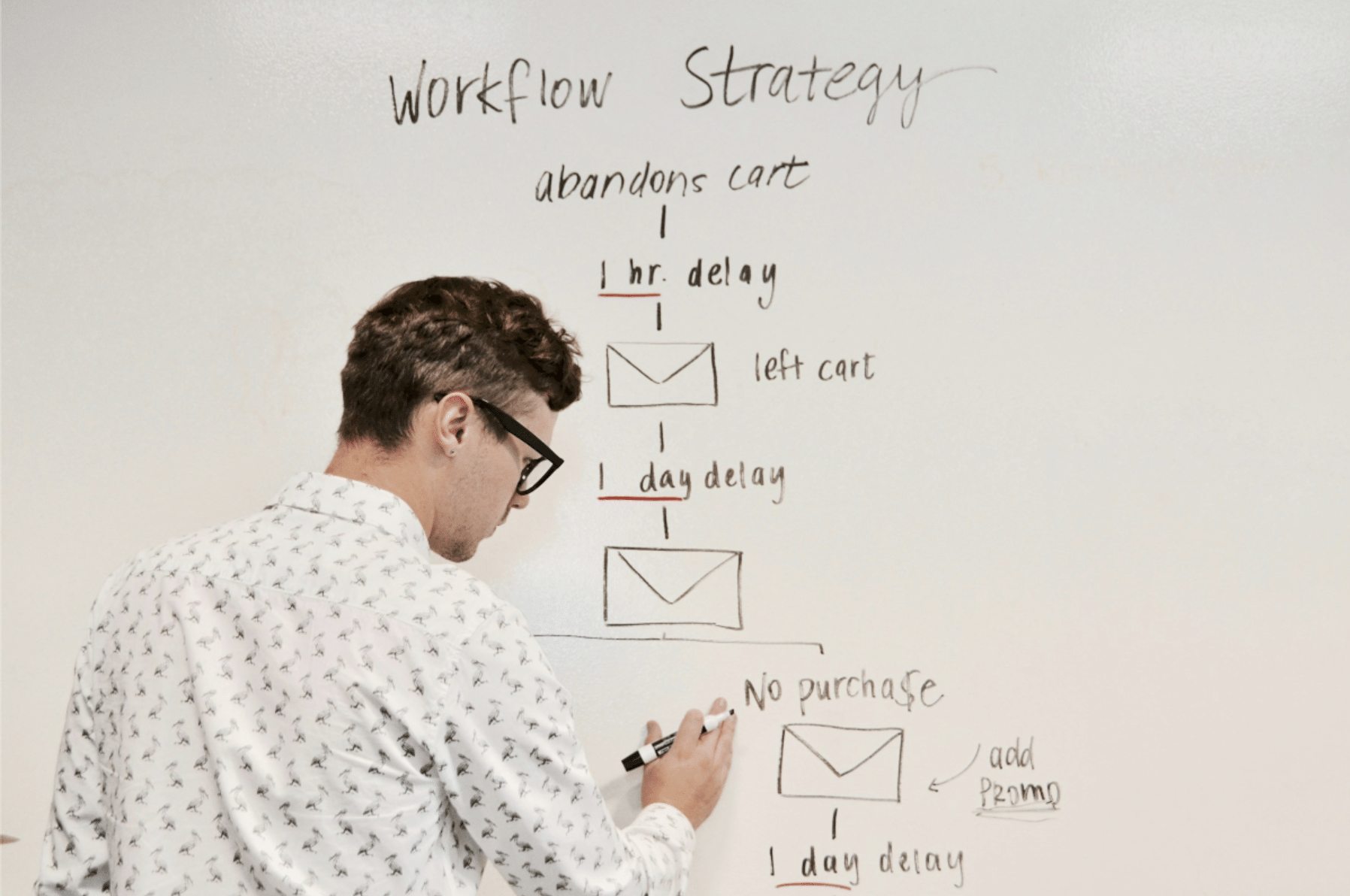
Plenty of agencies have now bought, trialled or been sold an AI tool for one part of the business. An enquiry bot. An auto-responder for rental leads. A tool that drafts listing copy in seconds. And plenty of Principals have noticed the same thing a few months later: the tool works, but the agency doesn’t feel any faster.
That isn’t a failure of the technology. It’s a failure of the workflow around it.
REA’s own product team found the same thing
In September, REA Group Chief Technology Officer Steve Maidment told Elite Agent that AI’s real value doesn’t come from making one person faster. It comes from speeding up the whole path from an idea to a customer receiving something useful. REA built an internal program, FlowLab, around that measure after its own AI experiments showed something uncomfortable: individual productivity gains simply exposed the delays everywhere else.
“If one person’s going faster but the rest aren’t, you’re not actually seeing the value up the other side,” Maidment said.
He used a simple analogy. Speeding up the conveyor belts in a warehouse achieves very little if the goods still can’t leave the dock. And his read on where most businesses go wrong was just as direct: they focus on automating individual tasks, but “they’re not rethinking the process in the office.”
What that looks like inside an agency
Take rental enquiries. It’s the exact problem behind Agent Angel, a prototype REA built with Ray White Upper North Shore to take on the repetitive load of rental enquiries and inspection scheduling. Maidment noted that in a smaller agency, this kind of work can take up a large share of one person’s day.
Now imagine an AI tool answers every rental enquiry instantly. Great. But if:
- inspection times still have to be confirmed by a property manager squeezing it in between appointments,
- applications still sit in an inbox until someone has time to check them, and
- nobody actually owns the follow-up with applicants after the inspection,
then the applicant still waits, the landlord still waits, and the property manager is still the bottleneck. You’ve sped up step one of a seven-step process.
The better question: what work belongs where?
The agencies getting real value aren’t asking “which AI tool should we buy?” They’re mapping a whole workflow and deciding, step by step, where each piece of work belongs: with onshore people, offshore professionals, AI or automation.
Here’s what that looks like for a typical leasing workflow:
| Step | Best fit | Why it belongs there |
|---|---|---|
| 1. Answer the first enquiry and common questions | AI | High volume, repetitive, needs to be instant and available after hours |
| 2. Book inspections, send confirmations and reminders | Automation | Rules-based; calendar and SMS tools do it reliably every time |
| 3. Register attendees and follow up after the inspection | Offshore | Needs a human tone and a consistent daily routine |
| 4. Check applications, references and ID | Offshore | Detailed process work in your PM system, done the same way every time |
| 5. Shortlist and recommend to the landlord | Onshore | Judgement, relationship and accountability to the owner |
| 6. Approve the applicant and sign the lease | Onshore | Licensed and principal authority stays with your onshore team |
| 7. Prepare lease paperwork and move-in admin | Offshore Automation | Prepared offshore, then checked and executed onshore |
Illustrative example only. Licensing, trust-account and lease-execution requirements vary by state and territory, so confirm which tasks must stay with a licensed person in your jurisdiction.
Look at what happens across the whole flow. AI handles speed. Automation handles reliability. Offshore real estate specialists handle the volume of detailed process work that used to fill a property manager’s day. And your onshore property manager spends their time on the landlord relationship and the decisions only they can make.
No single step is dramatically faster on its own. The whole workflow is.
Where to start
Don’t start with a tool. Start with one workflow that frustrates your team every week: leasing, maintenance, sales campaign admin or database follow-up. Write down every step from trigger to finish. Then, for each step, ask:
- Does it need a licence, a relationship or a judgement call? Keep it onshore.
- Is it rules-based enough to run on its own? Automate it.
- Is it high-volume, repetitive and low-risk? That’s where AI earns its keep.
- Is it detailed process work that a trained real estate specialist could own end to end? That’s offshore.
Once it’s mapped, you’ll know whether the tool you’re looking at actually fixes your bottleneck, or just moves it further down the line.
Why we map the whole workflow first
- ✓A faster step only creates value when the steps around it keep up
- ✓Licensed approvals and client relationships stay with your onshore team
- ✓AI and automation take the repetitive, rules-based volume
- ✓Offshore real estate specialists own the detailed process work in between
- ✓You find the real bottleneck before you spend money on another tool
Want to map one of your own workflows? Talk to the REassist team and we’ll walk through it with you, step by step, to show where the time is actually going and what work belongs where.